Interview with Fergus Bordewich 3
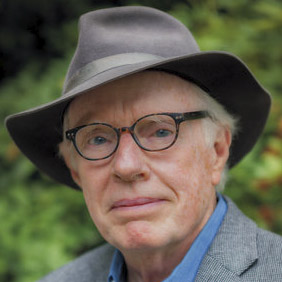
Fergus Bordewich
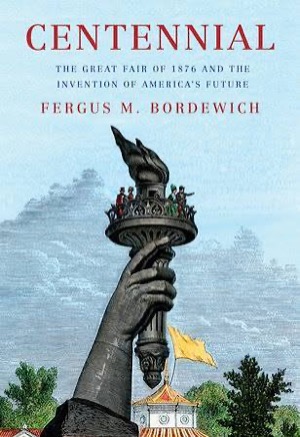
author of "Centennial: The Great Fair of 1876 and the Invention of America's Future"
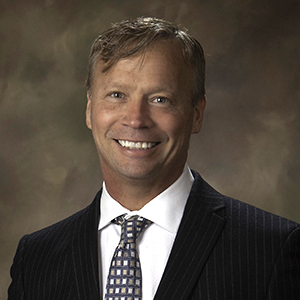
Michael Carter
Co-Host
Fergus Bordewich , author of "Centennial: The Great Fair of 1876 and the Invention of America's Future"
Fergus Bordewich's Website
FERGUS M. BORDEWICH is the author of eight non-fiction books: CONGRESS AT WAR: How Republican Reformers Fought The Civil War, Defied Lincoln, Ended Slavery, And Remade America, (Alfred A. Knopf, 2020); THE FIRST CONGRESS: How James Madison, George Washington, and a Group of Extraordinary Men Invented the Government (Simon & Schuster, 2016. Winner of the 2019 D.B. Hardeman Prize), AMERICA’S GREAT DEBATE: Henry Clay, Stephen A. Douglas, and the Compromise that Preserved the Union (Simon & Schuster, 2012. Winner of the 2012 Los Angeles Times History Prize); WASHINGTON: The Making of the American Capital (Amistad/HarperCollins, 2008); BOUND FOR CANAAN: The Underground Railroad and the War for the Soul of America (Amistad/HarperCollins, 2005); MY MOTHER’S GHOST, a memoir (Doubleday, 2001); KILLING THE WHITE MAN’S INDIAN: Reinventing Native Americans at the End of the Twentieth Century (Doubleday, 1996); and CATHAY: A Journey in Search of Old China (Prentice Hall Press, 1991). He lives in San Francisco, CA with his wife, Jean Parvin Bordewich.
Bordewich is a frequent book reviewer for the Wall Street Journal and other popular and scholarly periodicals, mostly on subjects in 18th and 19th century American history. He has published an illustrated children’s book, Peach Blossom Spring (Simon & Schuster, 1994), and wrote the script for a PBS documentary about Thomas Jefferson, Mr. Jefferson’s University. He also edited an illustrated book of eyewitness accounts of the 1989 Tiananmen Massacre, Children of the Dragon (Macmillan, 1990).
He has been an independent historian and writer since the early 1970s. In 2015, he served as chairman of the awards committee for the Frederick Douglass Book Prize, given by the Gilder-Lehrman Center for the Study of Slavery, Resistance, and Abolition, at Yale University. He is a frequent public speaker at universities and other forums, as well as on radio and television. His articles have appeared in many magazines and newspapers, including the New York Times, Wall Street Journal, Smithsonian, American Heritage, Atlantic, Harper’s, New York Magazine, GEO, Reader’s Digest, and others. As a journalist, he traveled extensively in Asia, the Middle East, Europe, and Africa, writing on politics, economic issues, culture, and history, on subjects ranging from the civil war in Burma, religious repression in China, Islamic fundamentalism, German reunification, the Irish economy, Kenya’s population crisis, among many others. He also served for brief periods as an editor and writer for the Tehran Journal in Iran, in 1972-1973, a press officer for the United Nations, in 1980-1982, and an advisor to the New China News Agency in Beijing, in 1982-1983, when that agency was embarking on its effort to switch from a propaganda model to a western-style journalistic one.
Bordewich was born in New York City in 1947, and grew up in Yonkers, New York. While growing up, he often traveled to Indian reservations around the United States with his mother, LaVerne Madigan Bordewich, the executive director of the Association on American Indian Affairs, then the only independent advocacy organization for Native Americans. This early experience helped to shape his lifelong preoccupation with American history, the settlement of the continent, and issues of race, and political power. He holds degrees from the City College of New York and Columbia University. In the late 1960s, he did voter registration for the NAACP in the still-segregated South; he also worked as a roustabout in Alaska’s Arctic oil fields, a taxi driver in New York City, and a deckhand on a Norwegian freighter.
The Book: "Centennial: The Great Fair of 1876 and the Invention of America's Future"
ISBN: 9780593803363
Get the bookThe spectacular story of America’s hundredth birthday bash—the country’s first world’s fair and a moment of reckoning for a nation barreling toward the Gilded Age
“Those who were there felt that the wheel of history itself had turned before their eyes.”
Held at Fairmount Park, in Philadelphia, the Great Centennial Exhibition of 1876 attracted 10 million Americans—nearly 20 percent of the population, among them P. T. Barnum, Frederick Douglass, and Mark Twain—and visitors from around the world, including the emperor of Brazil, Dom Pedro (who couldn’t get enough of the exhibition). On display were inventions that signaled the changing landscape of American life, from the typewriter to the telephone to Heinz Tomato Ketchup.
This celebration of America’s first century came at a moment when its future seemed more precarious than ever—as big money threatened to overwhelm the government, underpaid workers waged the first national labor strike, feminists demanded rights for women, Native tribes went to war to repel the advancing settlement in the West, and Black Americans struggled to exercise their hard-won freedom. Looming over the fair was the presidential race of 1876—a highly contested election that would determine the fate of Reconstruction and permanently shape the Republican party as we know it today.
Fergus Bordewich animates these converging crises through the lives of four protagonists—Rutherford B. Hayes, Alexander Graham Bell, railroad magnate Tom Scott, and sculptor Edmonia Lewis—revealing a country striving to live up to the promise of its founders while bracing for the tidal wave of the twentieth century.